What is Zero Trust?
The term “Zero Trust” is currently considered the most important security concept for IT infrastructures. It originates from the term “Zero-Trust Network Access” or “ZTNA” for short and was coined by the analyst firm Gartner.
But what does “Zero Trust” actually mean? And what are the advantages of this form of network architecture?
We break down for you what defines Zero Trust, why this security concept offers up-to-date protection for remote access applications in particular and how you can switch to this solution quickly and easily.
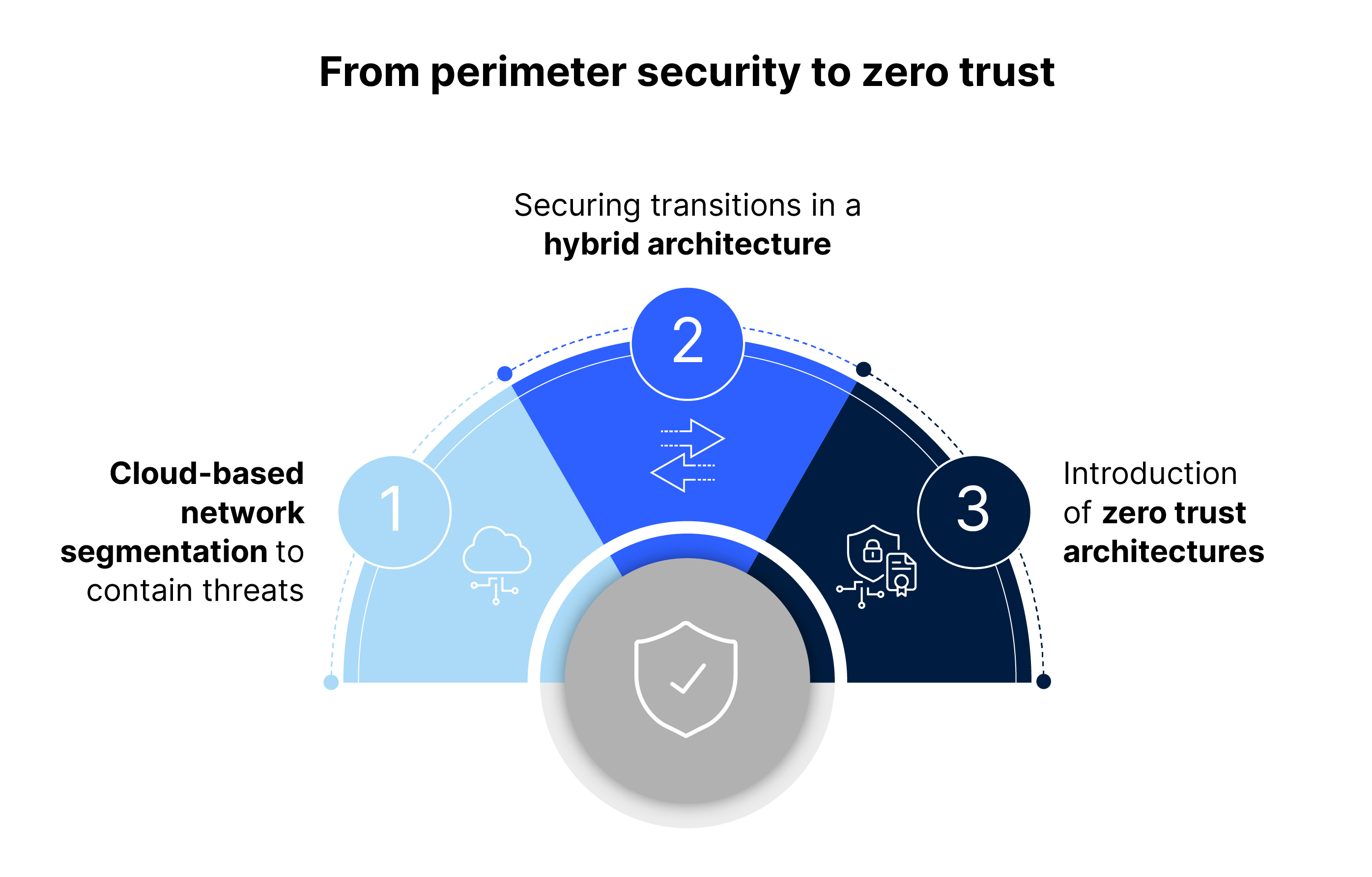
Definition Zero Trust Network Access (ZTNA)
Gartner defines Zero Trust as a security concept that assumes that nothing and no one inside or outside the network is trustworthy. Essentially, this means that any access to resources in the network – whether from outside or inside – must always be minimized, authorized, and authenticated, before it is allowed.
Compared to a traditional network, the Zero Trust principle does not grant users or devices access to entire networks, but only to specific applications or network resources.
This type of “micro-segmentation” ensures that company servers no longer have to be connected to each other in an intranet. Thus, if a server is compromised, this prevents malware from spreading unhindered across the entire intranet.

Why remote access according to the Zero Trust principle?
Older VPN structures are reaching their limits
Decentralized network infrastructures, remote work, and the digital outsourcing of data and applications to clouds have changed corporate networks with their flexibility and lack of transparency of user activities to such an extent that older VPN-based network security is increasingly reaching its limits. Data traffic, usage patterns, and access can no longer be monitored to the same extent as before.
This makes the protection and management of all hybrid, widely separated, and therefore insufficiently controllable network components laborious. In the event of an attack, these circumstances can also lead to malware spreading to the entire company network in case one end device is taken over. Such cyberattacks on companies using ransomware and lateral movement are unfortunately increasing year by year and are becoming ever more difficult to identify.
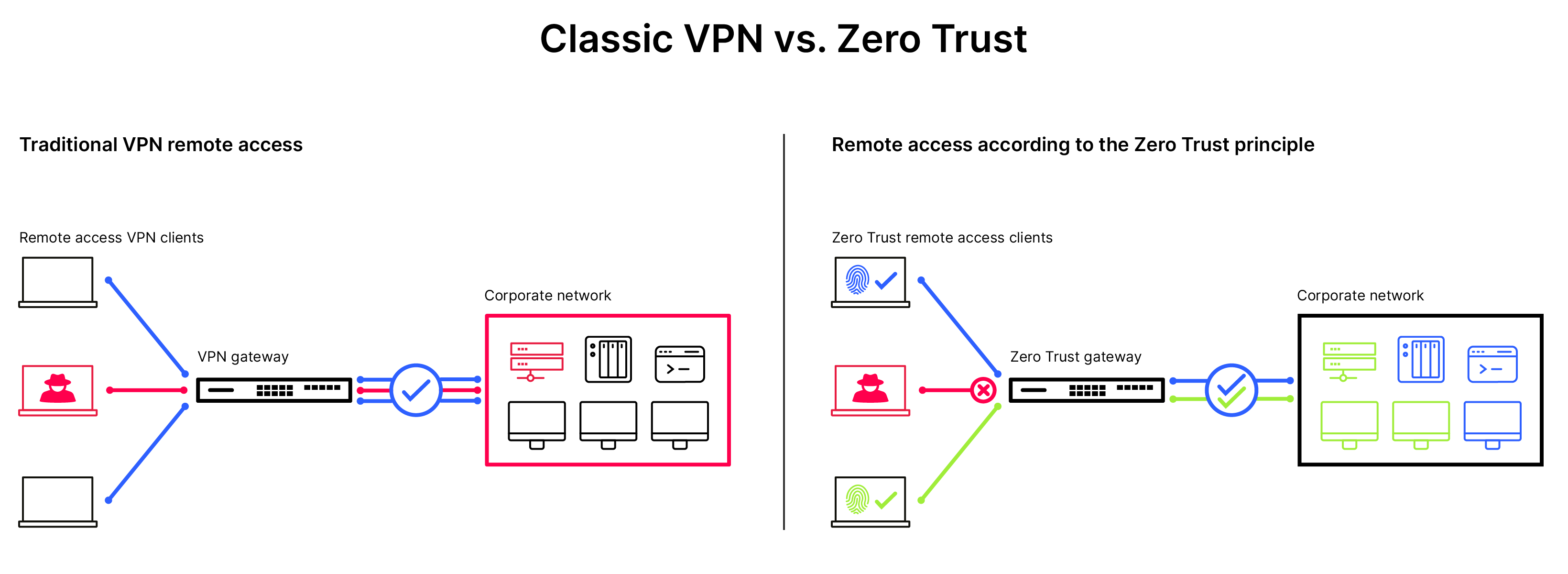
What makes Zero Trust different
This makes it all the more important to close the newly created security gaps and adapt the security infrastructure to the current circumstances. The modern and proven tool of meeting these requirements is network access according to the Zero Trust principle in line with the policy “trust no one, check everything”. Zero Trust extends the one-off authentication for the entire network or entire network segments via a VPN client to include multiple, recurring and regularly verifiable authentications for specific applications.
Specially developed for remote access scenarios, Zero Trust secures all dial-ins to the network in a modern way and also securely connects external services such as data centers or clouds. This means that existing and new remote workstations, including all user and application approvals, can be managed, checked and set up more specifically.
What are the advantages of Zero Trust?
The increased security factor through Zero Trust is now obvious. However, the new remote access concept has many more advantages than just network security: employees, IT, the HR department and management all benefit from the Zero Trust principle in a variety of ways:
Home office and mobile work for employees
Need: Quick and easy access to all applications and resources for day-to-day work for employees at home, on the move, and at work
Zero Trust features:
- Single sign-on: enter login details once, then seamless access to all resources
- Enhanced endpoint security: greater self-protection through endpoint security checks, multi-factor authentication, and network segmentation

Contemporary network protection for IT / security officers
Need: Protection of the network against external threats, especially ransomware; secure integration of home offices and external companies; continuous further development of security
Zero Trust features:
- Granular access control and segmentation (“software-defined perimeter”, SDP) for lateral network protection
- Highly secure “full tunnel” operation according to central security policies with 24/7 monitoring
- Fast response times thanks to cloud management

Convenient onboarding / offboarding and management for HR and management
Needs: Counteract skills shortages with effortless integration of new employees and external service providers; secure company growth; legal protection through compliance with laws and standards
Zero Trust features:
- Integration of existing user databases in the company
- Quick setup and blocking of remote access connections (zero-touch rollout and auto-configuration of clients)
- Central license management and monitoring